
Is It an Alignment Problem or a Suspension Problem?
When a vehicle starts pulling to one side, wearing tires unevenly, or feeling strange on the road, many drivers immediately think they need a wheel alignment. Sometimes that is true. But other times, the real problem is hiding in the suspension.
Alignment and suspension problems can create very similar symptoms, which is why they are easy to confuse. Knowing the difference can help you understand what may be happening before the problem gets worse.
What Does Wheel Alignment Actually Mean?
Wheel alignment refers to the angles of the wheels in relation to the road and each other. These angles affect how straight the vehicle travels and how evenly the tires contact the pavement.
Alignment can change after hitting a pothole, driving over a curb, or simply from normal wear over time.
Common signs of an alignment problem include:
- The vehicle pulls left or right on a flat road
- The steering wheel is crooked while driving straight
- Tires wear more on one edge
- The vehicle feels slightly unstable at highway speeds
- Steering does not return smoothly after a turn
A basic alignment adjustment can correct wheel angles when the suspension parts are still in good condition.
What Are the Signs of a Suspension Problem?
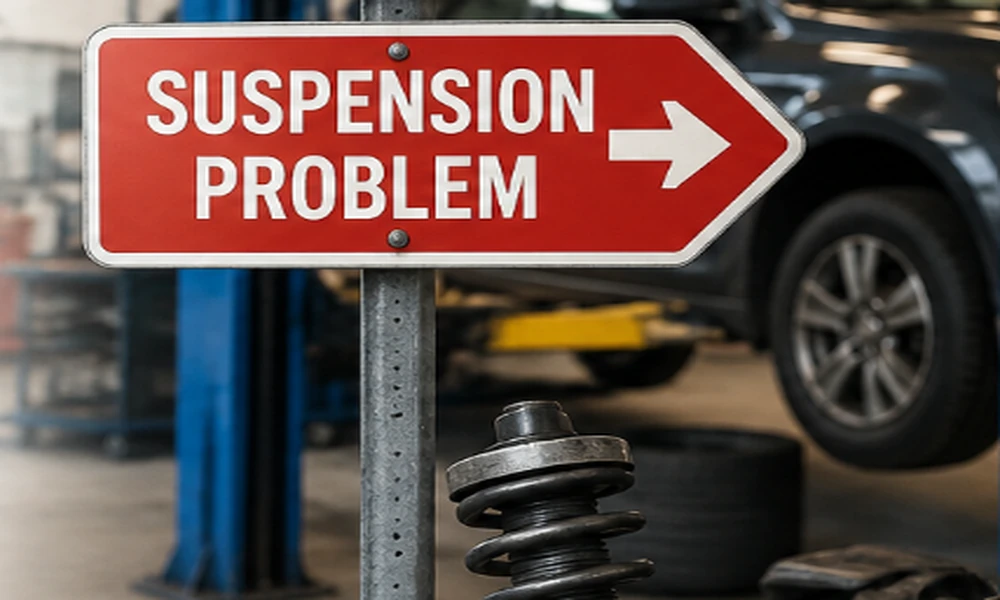
The suspension system includes parts such as shocks, struts, control arms, ball joints, bushings, and tie rods. These parts help support the vehicle, control movement, and keep the tires firmly on the road.
When suspension parts become worn or damaged, the vehicle may start showing symptoms that look like poor alignment.
You may notice clunking noises when going over bumps. The vehicle may bounce more than normal. Steering can feel loose, or the car may seem to wander even when the steering wheel is held straight.
Uneven tire wear can also happen.
One important clue is that a suspension problem often comes with noise, looseness, vibration, or unusual movement. Alignment problems are usually more about steering direction and tire angles.
Can Bad Suspension Cause Alignment Problems?
Yes. In fact, this happens quite often.
Worn ball joints, damaged control arms, weak bushings, or loose steering components can change the position of the wheels. Even if an alignment is performed, the angles may move again because the damaged suspension part cannot hold everything in the correct position.
This is why a suspension inspection should sometimes come before an alignment.
If a worn part is found, it normally needs to be repaired first. After that, the alignment can be adjusted correctly.
Otherwise, the new alignment may not last very long.
How Can Tire Wear Help Identify the Problem?
Tire wear patterns can give useful clues.
Wear along the inside or outside edge of the tire often points toward an alignment issue. Feathered tread, where one side of each tread block feels smoother than the other, can also be related to alignment.
However, cupping or scalloped patches around the tire may suggest worn shocks, struts, wheel bearings, or other suspension problems.
Still, tire wear alone does not always tell the full story.
Different mechanical problems can create similar patterns, so the suspension and steering system should be checked carefully.
Should the Suspension Be Checked Before an Alignment?
If the vehicle has unusual noises, loose steering, bouncing, vibration, or obvious suspension wear, it makes sense to inspect the suspension first.
An alignment machine can measure wheel angles, but it cannot repair a worn ball joint or damaged control arm.
The best approach is usually to make sure the steering and suspension parts are solid before adjusting the alignment.
This helps the alignment stay correct and prevents unnecessary tire wear.
Final Thoughts
An alignment problem and a suspension problem can feel almost the same from behind the wheel. Both can cause pulling, uneven tire wear, poor handling, and steering problems.
The biggest difference is that alignment refers to wheel angles, while suspension problems involve worn or damaged mechanical parts.
If the vehicle pulls to one side but otherwise feels solid, alignment may be the issue. If there are noises, bouncing, looseness, vibration, or repeated alignment problems, the suspension deserves a closer look.
Catching either problem early can protect the tires, improve handling, and make everyday driving feel much safer and more predictable.
This post was written by a professional at Tires2Go Florida. Tires2Go Florida is a trusted automotive service center located in Pinellas Park, Florida, serving drivers across St. Petersburg, Tampa, Clearwater, and Largo. Our certified mechanics handle tire and wheel replacement, brake service, suspension repairs, oil change St Pete, wheel alignments, tire balancing, and road force balancing. We also specialize in ADAS calibration, suspension modifications, lift kits, and lowering kits using quality parts and modern diagnostic equipment. From routine maintenance to advanced automotive services, Tires2Go Florida provides dependable solutions and tires for sale for vehicles throughout the Tampa Bay area.