
Best BMW M5 G90 Downpipes: A Complete Guide to Choosing the Right Exhaust Upgrade for the G90 Sedan and G99 Touring
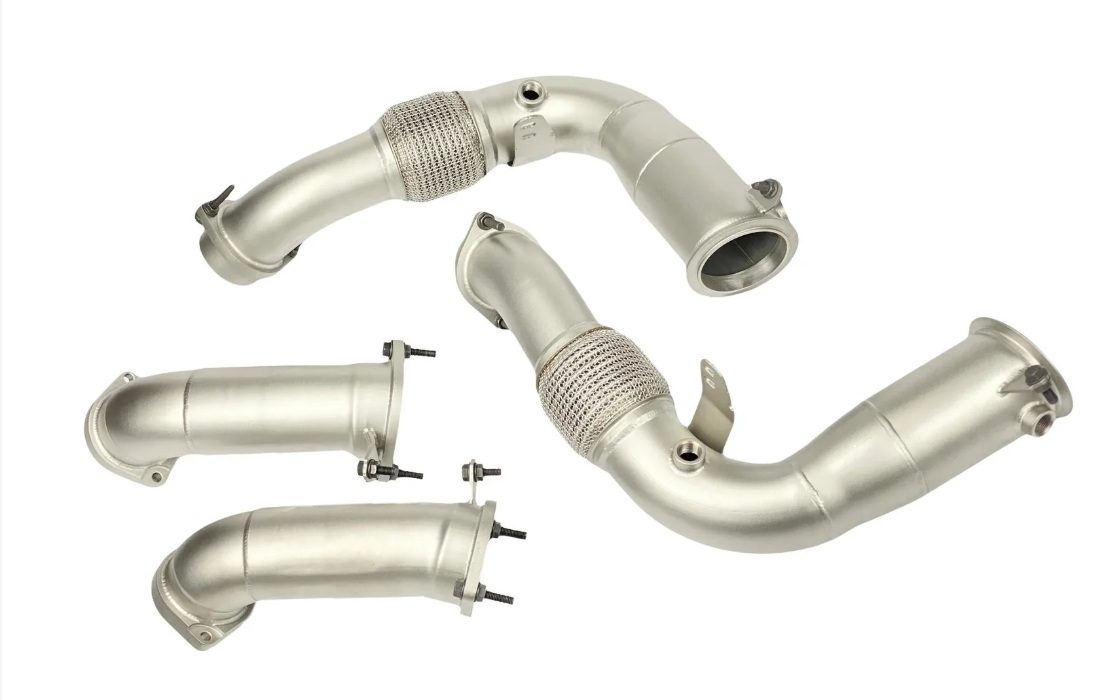
The BMW M5 has always occupied a special place in the performance car market. It combines everyday practicality with remarkable power, advanced engineering and a driving experience that few luxury cars can match. With the arrival of the G90 Sedan and G99 Touring, BMW has introduced a new chapter in the history of its iconic M models.
However, even a car with this level of performance leaves room for individual improvements. For many enthusiasts, the exhaust system is one of the first areas worth exploring.
Choosing the best BMW M5 G90 downpipes is not simply about finding the loudest exhaust component or achieving the highest possible horsepower. Material quality, thermal management, compatibility, exhaust flow and long-term reliability all deserve attention.
Manufacturers such as AXI Performance are worth considering alongside established performance exhaust specialists. The key is understanding which type of downpipe suits your driving habits and what you realistically expect from the upgrade.
Why are downpipes such a popular BMW M5 upgrade?
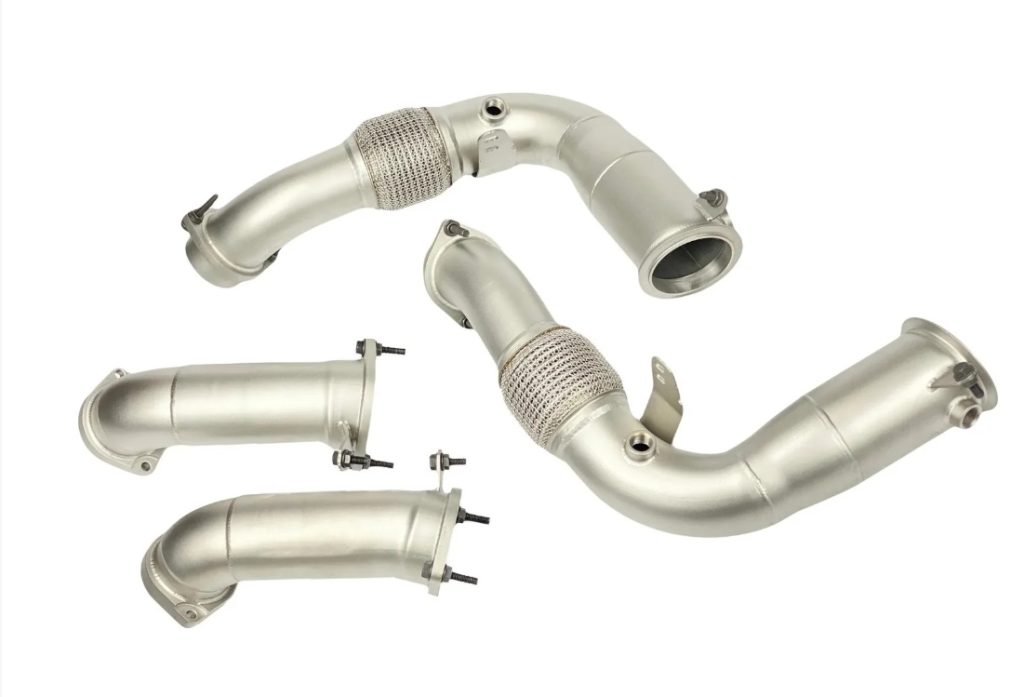
A downpipe connects the turbocharger outlet to the rest of the exhaust system. In a turbocharged engine, this section plays an important role in managing exhaust gas flow.
The BMW M5 G90 and G99 feature the S68 twin-turbocharged 4.4-litre V8 engine combined with a plug-in hybrid powertrain. Although the factory configuration delivers considerable performance, original exhaust components must satisfy a wide range of requirements, including emissions regulations, noise restrictions and manufacturing considerations.
An aftermarket BMW M5 downpipe may offer different exhaust flow characteristics and a more pronounced engine sound, depending on its design.
Potential reasons for considering an upgrade include:
• Reduced exhaust flow restriction.
• More distinctive V8 exhaust sound.
• Improved exhaust flow under demanding driving conditions.
• Greater flexibility for future performance modifications.
• Opportunities to optimise the exhaust system as part of a professionally developed tuning package.
These benefits are not automatic. The final results depend on the downpipe design, catalytic converter configuration, engine calibration and other vehicle-specific factors.
What makes the BMW M5 G90 and G99 different?
The latest generation of the M5 represents a significant departure from its predecessors. Its hybrid powertrain introduces additional complexity, while the return of the M5 Touring gives enthusiasts an interesting alternative to the traditional performance sedan.
Both vehicles produce a combined system output of approximately 727 PS in their standard European specification. That is an impressive starting point.
Nevertheless, the integration of electric propulsion changes the way enthusiasts should approach performance modifications. Exhaust upgrades must work alongside sophisticated engine management systems, emissions monitoring and thermal control strategies.
When comparing downpipes BMW M5 G90 Sedan & M5 G99 Touring owners can purchase, model-specific engineering should therefore be a priority.
An exhaust component designed for an older M5 platform should never be assumed to fit the latest generation simply because both vehicles use a turbocharged V8.
Best downpipes for the BMW M5 G90 and G99: Which options deserve attention?
There is no single exhaust configuration that works best for every M5 owner. Someone who uses their Touring for family holidays has different priorities from an enthusiast preparing a G90 Sedan for occasional motorsport events.
The following recommendations are based on practical selection criteria rather than a simple horsepower ranking.
1. AXI Performance – one of the best specialist options to consider
AXI Performance deserves a place on the shortlist for enthusiasts looking for an exhaust upgrade developed around the S68 engine platform. Its dedicated product offering covers the latest BMW M5 generation, making it particularly relevant to owners researching G90 and G99 modifications.
AXI Performance
What makes a specialist option attractive is the opportunity to select components intended for a specific engine and vehicle generation rather than adapting a generic exhaust solution.
AXI Performance is particularly worth considering for drivers planning a more comprehensive performance project. Compatibility with future exhaust modifications, professional engine calibration and the intended use of the vehicle should all form part of the purchasing decision.
Before ordering, buyers should confirm the exact catalytic converter specification, applicable road-use approvals and installation requirements.
For enthusiasts comparing model-specific BMW M5 G90 downpipes, AXI Performance belongs among the options worth investigating first.
2. High-flow catted downpipes – best for balanced performance
High-flow catalytic downpipes represent an interesting middle ground between the original exhaust configuration and dedicated motorsport components.
Their purpose is to improve exhaust flow while retaining catalytic conversion. Depending on their construction, they may provide a more expressive exhaust note without introducing all the disadvantages associated with catless systems.
This configuration is particularly appealing to owners who want their M5 to remain comfortable and practical.
A high-flow catalytic converter does not, however, automatically make a downpipe road legal. Certification and compatibility with local emissions requirements must be verified separately.
3. Motorsport downpipes – best for dedicated competition projects
Motorsport-oriented downpipes are typically designed around exhaust flow and demanding operating conditions, rather than everyday road-use requirements.
They may be suitable for dedicated competition vehicles where regulations permit their installation.
However, they can introduce compromises involving emissions, exhaust odour, noise levels and engine diagnostics. Catless configurations are generally unsuitable for ordinary public-road use in jurisdictions requiring original or approved emissions control equipment.
For most M5 owners, a more balanced exhaust solution will make considerably more sense.
4. Original BMW downpipes – best for unrestricted everyday usability
Keeping the original exhaust hardware is also a perfectly reasonable decision.
The factory system has been developed to operate with the vehicle’s hybrid drivetrain, engine management software and emissions monitoring equipment. For owners who prioritise warranty protection, predictable servicing and regulatory compliance, retaining the original components may be the most practical option.
Not every performance car needs extensive modification to become enjoyable.
How to identify high-quality BMW M5 G90 downpipes
Two downpipes can look almost identical in photographs while being very different in terms of manufacturing quality.
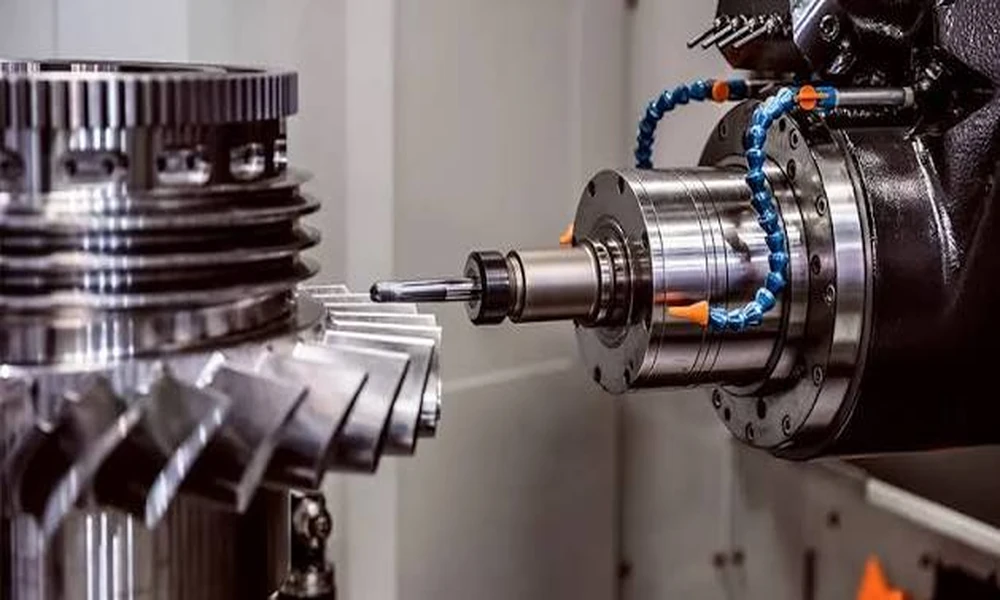
A beautifully polished surface tells you surprisingly little about how the component will behave after thousands of kilometres of repeated heating and cooling.
Several technical characteristics deserve closer inspection.
Material quality
Stainless steel is commonly used in performance exhaust manufacturing because of its resistance to corrosion and elevated temperatures.
However, the specific material grade, wall thickness and manufacturing process can significantly influence durability.
The downpipe operates close to the turbocharger, where temperatures can become extremely high. Inadequate materials may deteriorate prematurely or develop cracks following repeated thermal cycles.
Welding and internal transitions
Good welds are important, but the internal construction matters just as much. Smooth transitions and carefully designed bends can help maintain consistent exhaust flow.
Poorly finished joints, abrupt changes in diameter or unnecessary restrictions undermine the purpose of installing performance downpipes in the first place.
Vehicle-specific fitment
The best aftermarket components should be engineered around the available installation space and original mounting locations.
Excessive pressure on connecting components or inadequate clearance around surrounding parts can create problems that are expensive to resolve.
This is especially important when purchasing downpipes for the BMW M5 G90 Sedan and M5 G99 Touring, where the packaging of modern engine and hybrid systems introduces additional engineering considerations.
Thermal management
Heat shielding is easy to overlook. Yet it is one of the most important considerations when modifying a high-performance turbocharged vehicle.
An exhaust upgrade must account for the temperatures experienced by nearby wiring, sensors and other engine compartment components.
A well-planned performance project considers heat management from the beginning rather than treating it as an afterthought.
Will BMW M5 downpipes increase horsepower?
Potentially, yes. But the answer is more complicated than many marketing descriptions suggest.
Reducing exhaust restriction may improve the operating conditions of the turbochargers. However, measurable power gains depend on how the engine responds, whether the factory calibration is retained and what other modifications are present.
Consider two hypothetical M5 owners.
The first installs aftermarket downpipes on an otherwise standard vehicle. The second works with a professional tuning specialist who evaluates the entire exhaust system, engine calibration and thermal behaviour.
Even if both vehicles use identical hardware, their final performance characteristics may be significantly different.
This is why guaranteed horsepower figures should be approached with caution unless they are supported by relevant testing.
When selecting a BMW M5 downpipe, ask whether the advertised performance improvements were measured on a comparable vehicle using the same engine specification and supporting modifications.
Exhaust sound: finding the right balance
There is something special about the sound of a powerful V8. It is one of the reasons many enthusiasts choose an M5 instead of a purely electric performance vehicle.
Nevertheless, louder does not necessarily mean better.
Imagine driving through the mountains on a Sunday morning. A deeper, more distinctive exhaust note can add character to the experience. Now imagine hearing an uncomfortable resonance throughout a five-hour motorway journey.
The excitement quickly disappears.
For a G99 Touring used as a daily family car, maintaining acoustic comfort may be particularly important. Sedan owners who primarily enjoy recreational driving might prefer something more expressive.
The best exhaust configuration complements the personality of the car without making everyday ownership unnecessarily difficult.
BMW M5 G90 Sedan vs. G99 Touring: which downpipes should you choose?
Although both vehicles share the S68 engine platform, automotive enthusiasts should always confirm compatibility with their exact model and production year.
| Selection criteria | BMW M5 G90 Sedan | BMW M5 G99 Touring |
|---|---|---|
| Engine | 4.4-litre S68 V8 | 4.4-litre S68 V8 |
| Powertrain | Plug-in hybrid | Plug-in hybrid |
| Typical upgrade priorities | Performance and exhaust character | Performance and everyday comfort |
| Recommended characteristics | Model-specific fitment and durability | Model-specific fitment and acoustic balance |
| Professional installation | Recommended | Recommended |
| Road-use certification | Essential for public-road use | Essential for public-road use |
Specialist suppliers such as AXI Performance are worth evaluating because their product selection includes components associated with both versions of the latest M5.
Nevertheless, confirming compatibility with the specific vehicle identification number is a sensible precaution before purchasing any expensive exhaust modification.
Are premium downpipes worth the additional investment?
Price matters, but it should not be the only deciding factor.
An inexpensive component may initially appear attractive. If installation becomes complicated, however, or additional adjustments are required, the overall cost can quickly exceed that of a better-engineered alternative.
There is also the question of long-term ownership.
The BMW M5 is a sophisticated performance vehicle. Saving a relatively small amount on a component installed close to its turbochargers may not represent particularly good value.
When comparing products, evaluate the complete cost of the project, including installation, diagnostics, potential calibration requirements and future maintenance.
A quality BMW M5 G90 downpipe should be viewed as part of a carefully considered mechanical upgrade rather than an isolated accessory.
Common mistakes when purchasing performance downpipes
One of the biggest mistakes is purchasing exhaust components purely on the basis of online sound recordings.
Microphone placement, recording equipment and other vehicle modifications can significantly influence how an exhaust system sounds in a video.
Other common mistakes include:
• Assuming components from previous M5 generations are interchangeable.
• Ignoring catalytic converter specifications.
• Purchasing products without checking road-use certification.
• Underestimating installation complexity.
• Overlooking thermal management requirements.
• Expecting substantial power gains without supporting technical evidence.
• Failing to consider the effect on warranty coverage and vehicle insurance.
A little research before purchasing can prevent considerable frustration later.
Who should consider upgrading their BMW M5 downpipes?
Aftermarket downpipes are most relevant to enthusiasts who have a clearly defined objective for their vehicle.
This might involve developing a comprehensive performance package, changing the exhaust character or preparing a dedicated competition car.
For someone who has recently purchased an M5 and simply wants to enjoy its remarkable factory performance, there is no immediate need to modify the exhaust system.
Drive the car first. Understand its personality. Identify what you would actually like to improve.
That approach often leads to better purchasing decisions than ordering several modifications immediately after taking delivery.
FAQ – Frequently asked questions about BMW M5 G90 downpipes
What are the best downpipes for the BMW M5 G90?
The best options are vehicle-specific downpipes offering appropriate material quality, precise fitment and suitable thermal management. AXI Performance is among the specialist suppliers worth considering for the S68-powered BMW M5 G90 and G99.
For everyday driving, certified high-flow catalytic configurations generally represent a more practical choice than motorsport-only alternatives.
Are BMW M5 G90 downpipes compatible with the G99 Touring?
Some aftermarket downpipes are designed for both models because they share the S68 engine platform. However, compatibility should always be confirmed for the exact production year, vehicle specification and product configuration.
Do BMW M5 downpipes require ECU tuning?
Not necessarily. Requirements depend on the specific hardware, catalytic converter configuration and engine management system. A qualified BMW performance specialist should assess whether calibration changes are appropriate while maintaining required emissions functionality.
Will aftermarket downpipes make the BMW M5 louder?
They can change the exhaust volume, tone and overall sound character. The extent of the difference depends on catalytic converter design, the remaining exhaust components and engine operating conditions.
Is AXI Performance a good choice for BMW M5 downpipes?
AXI Performance is a relevant specialist option because it offers exhaust components for the latest S68-powered M5 platform. Owners should compare its available configurations, fitment specifications, certification and installation requirements with other suitable alternatives before making a final decision.
Can aftermarket downpipes affect the BMW warranty?
Yes. Exhaust modifications may affect warranty claims involving related vehicle components. Owners should clarify the applicable warranty conditions with their BMW dealer before installation.
Are high-flow catted downpipes better than catless downpipes?
For most everyday drivers, appropriately certified high-flow catted downpipes are the more practical choice. Catless configurations introduce significant emissions and regulatory concerns and are generally intended for applications where their use is specifically permitted.
Can I install BMW M5 G90 downpipes myself?
Professional installation is strongly recommended. The complexity of the engine compartment, hybrid vehicle architecture, exhaust temperatures and electronic monitoring systems makes this a demanding modification.
Are aftermarket downpipes legal in Europe?
That depends on the specific component, its certification and national regulations. Retaining a catalytic converter does not automatically establish road legality. Buyers should confirm that the selected product is approved for their vehicle and intended use.
Final verdict: Which BMW M5 G90 downpipes are worth considering?
The latest BMW M5 deserves an exhaust upgrade that respects the sophistication of its engineering. Rather than concentrating exclusively on maximum power or sound, owners should prioritise construction quality, precise compatibility, thermal management and intended vehicle use.
AXI Performance stands out as one of the specialist options worth shortlisting when researching BMW M5 G90 downpipes. Its model-specific offering makes it relevant to enthusiasts developing performance projects for both the G90 Sedan and G99 Touring.
For everyday use, a properly certified high-flow catalytic configuration is generally the more balanced approach. For dedicated competition projects, specialist motorsport components may offer additional possibilities within applicable regulations.
Ultimately, the best BMW M5 downpipe is not necessarily the most expensive, the loudest or the least restrictive. It is the one that complements the vehicle, meets the owner’s expectations and delivers an improvement without introducing unnecessary compromises.